Our History
Since 1816
St George’s marks the very beginning of Belfast — the place where the city first took root.
Over 700 years ago, a small chapel known as the Chapel of the Ford stood here for pilgrims waiting to cross the River Farset’s sandy ford — in Irish Béal Feirste, “mouth of the sand-bank ford,” the name that gave the city its own. By 1613, when Belfast received its royal charter, this humble chapel had become the town’s first parish church.
In 1690, King William of Orange paused here en route to the Battle of the Boyne, and a famous sermon — “Arise Great King” — was preached in his presence within these walls. Through centuries of change, war, and growth, a church on this spot has continually ministered to Belfast’s people.
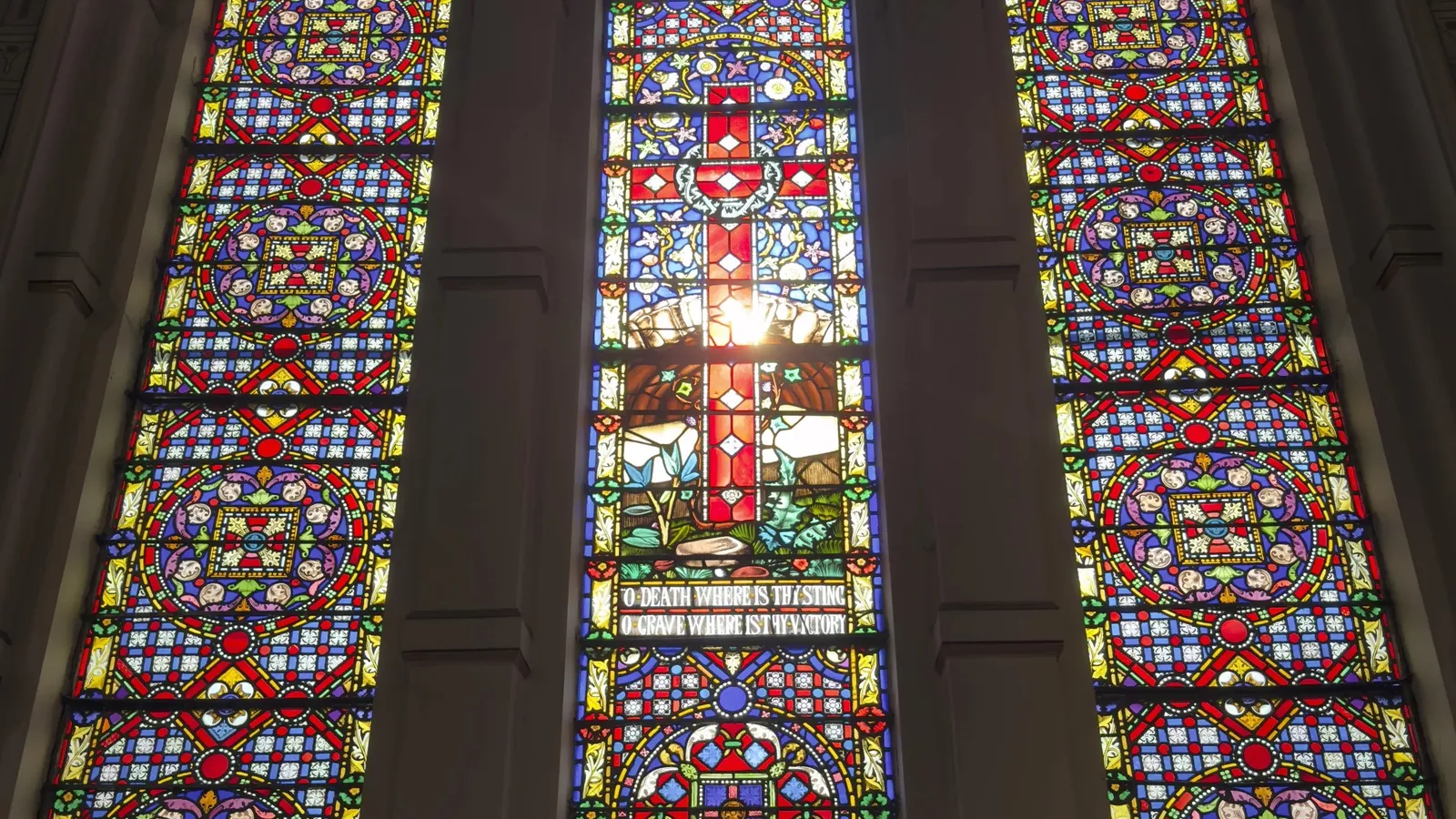
The present church was designed by the Irish architect John Bowden; its foundation stone was laid in 1813 and it opened for worship in 1816. A fine example of Neoclassical Georgian style built from honey-coloured Scrabo sandstone, its most striking feature is the grand Corinthian portico — a four-pillared classical porch originally crafted in 1788 for the Earl of Bristol’s Ballyscullion House, later transported to Belfast by barge along the Lagan Canal as the first barge cargo to arrive in the city.
Inside, a three-sided gallery and an ornate wooden chancel screen create an atmosphere of both grandeur and intimacy, with seating for over 500 worshippers. During the Troubles the church suffered serious bomb damage on a number of occasions, yet its spirit never faltered; it was lovingly restored each time, culminating in a major refurbishment in 2000. Today St George’s is a Grade A listed building — its ongoing story one of continuity and hope, where worship and music have never ceased on this holy ground.
1816
Worshipping on this site for over two centuries
3
Choirs — Parish, Female Voice, and Chamber
1817
Edward Bunting, our first organist
Grade A
Listed historic building